
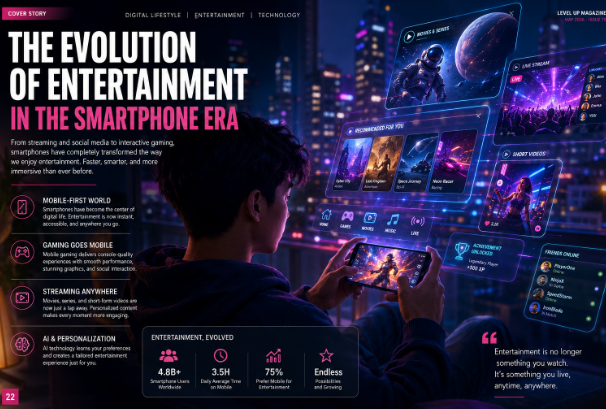

Entertainment No Longer Lives in One Place
Entertainment used to require time, space, and planning. People gathered around televisions, visited movie theaters, or sat in front of desktop computers for hours at a time. Today, however, entertainment follows people everywhere through the device they carry most often — the smartphone.
This shift completely changed how digital platforms operate. Modern users expect instant access, smooth navigation, and visually engaging experiences directly from mobile devices. Because of these expectations, many digital industries transformed rapidly over the last decade, including streaming services, social media, and interactive gaming platforms.
As mobile entertainment expanded globally, modern slot also evolved into visually immersive experiences designed specifically for smartphone users who value speed, simplicity, and accessibility.
The smartphone era introduced a new type of entertainment culture. Instead of consuming long-form content for several hours, users now interact with shorter and faster experiences throughout the day. People watch videos while commuting, browse social media during breaks, and access games within seconds whenever they want quick entertainment.
Consequently, entertainment became more flexible and deeply connected to everyday routines.
Smartphones Changed User Behavior Completely
The rise of mobile technology did more than improve convenience. It fundamentally changed human behavior online. Attention spans became shorter, scrolling habits became faster, and users started prioritizing instant interaction over slow experiences.
Because of this behavioral shift, digital platforms redesigned nearly everything around accessibility and speed.
Modern entertainment platforms now focus heavily on responsive interfaces, smooth animations, and simplified navigation systems. Users no longer tolerate complicated menus or slow loading times. Instead, they expect every interaction to feel seamless from the moment they open an application.
This transformation influenced almost every entertainment category.
Streaming platforms introduced personalized recommendations. Social media applications optimized endless scrolling systems. Meanwhile, mobile gaming developers redesigned experiences around shorter and more interactive sessions that fit naturally into busy daily schedules.
As a result, smartphone-based entertainment became the standard rather than the alternative.
Visual Design Became More Important Than Ever
One of the biggest changes in the smartphone era involves visual presentation. Modern users consume enormous amounts of content every day, which means platforms compete aggressively for attention.
Because of this competition, design quality now plays a critical role in user engagement.
Entertainment platforms increasingly use cinematic visuals, dark mode interfaces, neon-inspired color palettes, and smooth transitions to create more immersive experiences. These design choices do more than improve appearance. They influence emotion, attention, and user retention at the same time.
For example, modern gaming platforms often combine HD graphics, animated effects, and responsive controls to make experiences feel more dynamic and interactive. Some interfaces now resemble premium streaming applications rather than traditional gaming websites.
This visual evolution reflects broader trends within digital culture.
Users no longer separate entertainment categories as clearly as before. Gaming platforms borrow design ideas from social media apps. Streaming services implement interactive features inspired by gaming systems. Mobile applications prioritize personalization across every interaction.
Consequently, the entire digital entertainment ecosystem feels more connected than ever.
Speed and Accessibility Define Modern Entertainment
In the smartphone era, speed became one of the most valuable features in digital entertainment. Users expect instant results regardless of the platform they access.
Whether someone opens a video platform, social media feed, or mobile game, the expectation remains the same: fast loading times, smooth transitions, and minimal friction.
Because of these demands, developers continue investing heavily in optimization technologies.
Cloud systems now reduce installation requirements. Lightweight mobile frameworks improve performance across different devices. Faster internet connections also help users access immersive content almost anywhere.
As a result, entertainment experiences feel increasingly seamless.
This constant accessibility changed how people think about entertainment itself. Instead of scheduling time specifically for entertainment, users now consume digital content continuously throughout the day.
A short break becomes an opportunity to watch videos. A commute becomes time for mobile gaming. Even a few spare minutes can turn into quick interactive entertainment sessions.
Smartphones transformed entertainment into something immediate and constantly available.
Mobile Gaming Became Part of Everyday Lifestyle
Gaming experienced one of the biggest transformations during the mobile revolution. In the past, gaming often required expensive hardware or dedicated setups. Today, however, smartphones allow users to access interactive experiences instantly from almost anywhere.
This accessibility helped mobile gaming become part of everyday lifestyle rather than a separate activity.
Modern players prefer experiences that feel flexible and easy to access. Many users no longer want long setup processes or complicated mechanics. Instead, they enjoy games that deliver instant engagement with minimal barriers.
Consequently, developers started designing games around convenience, speed, and visual stimulation.
Artificial intelligence also plays a growing role in modern gaming ecosystems. Recommendation systems now analyze user behavior and personalize experiences based on preferences and activity patterns.
For example, users who frequently engage with fantasy-inspired content may receive recommendations featuring mythology themes, futuristic visuals, or cinematic gameplay elements.
This level of personalization increases engagement while making entertainment feel more tailored to individual users.
Digital Entertainment Is Becoming More Immersive
The future of smartphone entertainment appears even more immersive than today’s experiences. Artificial intelligence, augmented reality, and virtual reality continue shaping the next generation of digital platforms.
Many developers already experiment with interactive environments that blend entertainment, social interaction, and real-time engagement into a single experience.
At the same time, mobile hardware continues improving rapidly. Smartphones now support advanced graphics processing, smoother animations, and more powerful performance capabilities than ever before.
Because of these technological improvements, mobile entertainment increasingly rivals experiences once limited to high-end devices.
This evolution extends beyond gaming alone.
Streaming services now incorporate interactive storytelling. Social media platforms introduce AI-generated content systems. Digital entertainment platforms continue merging functionality from multiple industries into unified mobile experiences.
Consequently, smartphones no longer function simply as communication devices. They became the central hub of modern entertainment culture.
The Smartphone Era Continues Redefining Entertainment
The evolution of entertainment in the smartphone era reflects a much larger cultural transformation. Modern users value speed, flexibility, personalization, and accessibility more than ever before.
Because of these expectations, digital platforms continue adapting rapidly to match changing behavior patterns and entertainment habits.
The smartphone did not simply improve access to entertainment. It completely redefined how people interact with digital experiences every single day.
As technology continues evolving, entertainment will likely become even more immersive, intelligent, and integrated into daily life. However, one reality already feels clear: the future of entertainment now lives inside the mobile experience.